Can’t Focus? Five Causes, and the Fix for Each
"I can’t stay focused." "I tried Pomodoro and it didn’t work for me." Most of the time these are fixable with a small change. The problem is applying the same remedy — try harder — to five different causes.
This guide splits the problem into five causes and gives each a different fix. Find yours first, then read on.
First: how long does focus actually last?
For most people, high-quality focus holds for a few tens of minutes at best. Which means "concentrate for three hours straight" was never a workable plan.
Raising your focus isn’t about grinding longer. It’s about redistributing time to match how long focus really lasts. Once you accept that, none of the five causes below look like personal defects — they look like settings to adjust.
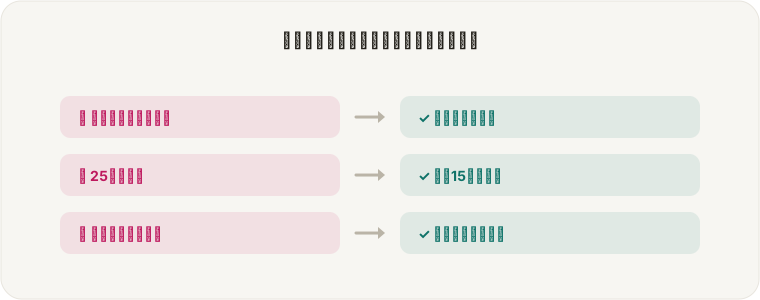
Cause 1: the interval doesn’t fit you
Losing focus at 25 minutes, or never getting going before it ends — both mean the length is wrong. Shorten to 15, or stretch to 50, whichever lets you reach the break intact.
The test is easy: if you spend the back half watching the clock it’s too long; if you think "already?" when it rings it’s too short. Move it five minutes at a time toward more completed rounds.
Cause 2: the break swallows the day
Five minutes becoming thirty on your phone isn’t willpower — it’s structure. Social feeds and video are built so the next item arrives automatically, which makes stopping by choice a losing game.
So: put a timer on the break, keep the phone out of arm’s reach, and swap the content of the break for something you can return from — stand up, get water, look out of a window.
Cause 3: you’re simply surrounded by distractions
If notifications and stray thoughts keep pulling you away, change the environment before the willpower. Anything in view takes a share of your attention by default.
- Phone out of sight — another room, or in a bag. Face-down on the desk isn’t enough
- Close unrelated tabs and notifications. A "read later" tab in view is still costing you
- Anything that surfaces gets one line in a note and is handled after the round
Cause 4: you’re aiming for perfect
If only a flawless day counts, the first imperfect day ends the habit. One round is enough. Count five minutes at a desk as a success rather than thinking in all-or-nothing terms.
This is also a bookkeeping problem. "I planned three hours and only did thirty minutes" is a failure; "I did thirty minutes" is a success. Same day, opposite outcome for whether you continue.
Cause 5: a genuinely restless mind
Poor sense of elapsed time, an unusually heavy cost to starting, no way back once you’ve drifted — if this is you, the four fixes above may not be enough on their own. Widen the adjustments.
Note that what follows is a set of practical timing habits, not medical advice. If this is significantly affecting daily life, speaking to a professional is worth more than any timer.
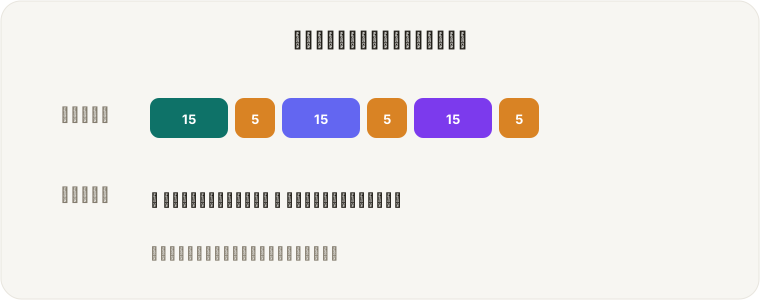
- Go much shorter: 10–15 minutes is fine. Shorter rounds finish, and finishing is what compounds
- Cut tasks absurdly small: not "study" but “open the textbook” as the literal task name
- Make time visible: a countdown you can see turns "how much longer" into something you can feel
- Decide where the break goes in advance: coming back is the hardest step, so don’t improvise it
How long per type of task
Once you know the cause, set the length by the material.
- Memorization (vocabulary, terms): 15–25 min, more rounds
- Reading and maths, anything that needs thought: 25–45 min
- Making things: 45–50 min works well
- Low-energy days: 5–15 min. Starting beats length
On the worst days, start from one minute
When nothing works, "just one minute" is enough. Starting is usually what carries you onward — the momentum arrives after the action, not before it.
In FocusBlock every minute of focus becomes one block, so even a five-minute day leaves five of them behind. That’s the move: turning "I did nothing today" into "I did one block."
Can’t focus — FAQ
I don’t think Pomodoro suits me.
Usually the length is simply wrong. Drop to 15 or stretch to 50 — whatever you can run to the end of. If you spend the back half watching the clock it’s too long; if it rings and you think "already?" it’s too short.
I never come back from breaks.
Put a timer on the break and keep your phone out of arm’s reach. Then swap the content of the break for something you can return from — standing up, getting water — rather than relying on willpower.
How many rounds should I aim for?
Start with four (about two hours) and adjust. Doing a sustainable amount every day beats forcing long sessions — the weekly total usually ends up higher.
My mind wanders constantly. What length works?
Forget 25 and start at 10–15 minutes, a length you can finish. Completed rounds compound into consistency. Make the task name the first physical step too, like "open the textbook."
What about days with no motivation at all?
One minute is enough — starting tends to carry you. If several days run like that, check sleep, food and movement before blaming your focus.