No Motivation? How to Start on the Days You Can’t
Everyone gets days with nothing in the tank. What matters is how you start, not how hard you push. “Just 25 minutes” gets you moving, and focus tends to arrive afterwards.
This guide is only about the first step on a bad day. Not productivity — just how to begin the first round.
Motivation follows action
Waiting for motivation rarely works. It usually shows up once you’re already moving. So the sequence isn’t "start when I feel like it" — it’s “move my hands for 25 minutes and see.”
Reversed, nothing ever begins. Three days of waiting is three days of nothing. Act first, collect the motivation afterwards — once that ordering feels normal, bad days cost you far less.
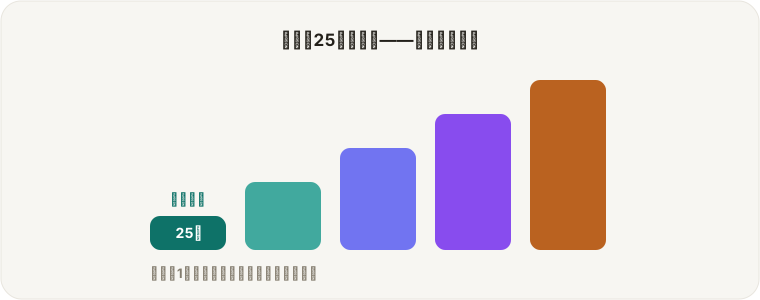
"Just 25 minutes" gets you moving
Drop the bar until stepping over it is trivial. A badly set target is enough on its own to freeze you.
- Aim low: not "finish it" but “put in 25 minutes”
- Still too heavy? Five minutes is fine. One block
- Do one thing (a list of options is what stopped you in the first place)
Lower the cost of beginning
Reducing the friction *before* the work is what pays. People delay anything that requires setup, so move the setup to the night before.
- Clear the desk and leave the first page open
- Phone somewhere else (one look and the impulse is gone)
- Decide the night before what tomorrow’s first round contains
- Same time, same place. Fewer decisions means a lighter start
What procrastination is actually protecting you from
Procrastination usually isn’t laziness. More often it’s avoiding an unpleasant feeling about the task: it looks hard, or like it might go badly, or simply tedious. To dodge that feeling, your brain offers you something else — a phone, or suddenly tidying up.
Which means the fix isn’t more willpower; it’s lowering the emotional load. Splitting the task, capping it at 25 minutes — both are ways of getting it down to "fine, this I can do."
Matching the fix to why you’re stuck
"No motivation" covers several different states, and the wrong fix does nothing. Here are the four that come up most.
| Why you’re stuck | How it shows up | What to do |
|---|---|---|
| It’s too big | You can’t decide where to begin | Make the first physical step the task name ("open the textbook") |
| It’s frightening | Everything else moves; only this gets avoided | Replace "finish it" with “put in 25 minutes” |
| You’re simply tired | Sitting down makes you sleepy, worse after 4pm | Stop at five minutes and sleep. Pushing won’t restore quality |
| It feels pointless | You start and stall repeatedly | Write the deadline or the reason in one line. If there isn’t one, it can wait |
Small wins keep it going
Motivation survives when finished rounds are visible. In FocusBlock every focused minute becomes one block, so even five minutes leaves five behind.
That "small but real" is the point. All-or-nothing thinking zeroes out an imperfect day; blocks only ever count what you actually did, and what you did always counts.
For the days that aren’t going to work
Some days there’s nothing there, and pushing is the wrong move. A system that can’t absorb a rest day will break on the first one.
- Do five minutes and call it. That’s allowed
- Sleep, food and movement are often the real cause. Rule those out before blaming your focus
- Don’t self-criticise. That time could have gone to recovering
- Start again tomorrow from one block. Protecting a streak was never the point
Motivation & procrastination — FAQ
Should I wait until I feel motivated?
No. Motivation usually arrives after you start moving, so "just 25 minutes" is more effective than waiting. The longer you wait, the higher the cost of beginning gets.
I can’t focus for 25 minutes.
Start at five. Run one block, and go again if it goes well. Even a short round proves you were able to begin, which is what carries into tomorrow. You can lengthen it later.
I can’t stop procrastinating.
Procrastination is usually avoidance of an unpleasant feeling about the task rather than laziness. Instead of pushing harder, cut the task down until it no longer triggers that feeling.
Any tips for keeping it up?
Don’t aim for perfect; record finished rounds and let small wins accumulate. Chasing an unbroken streak tends to end the habit entirely the first time a day goes wrong.