How to Set Up a Space for Focus (Desk, Light, Sound, Coffee)
Struggling to focus is often the environment rather than a lack of discipline. Fixing your desk, your light and your sound makes focus far easier to reach.
This guide sorts out the physical setup first — desk, light, phone — then covers choosing background sound and getting caffeine to land at the right moment. Set it up once and it works every day after.
The biggest win: put the phone somewhere else
The first thing to fix isn’t lighting or furniture — it’s getting your phone out of sight. Anything in view takes a share of attention, and face-down on the desk isn’t enough.
"Not looking at it" turns into a contest of willpower, and that spends the same focus you were trying to save. Put it in another room or a bag and there’s no contest to lose. Enormous effect, zero cost.
The desk: remove what pulls at you
What’s in view becomes what distracts you. The only sorting rule you need is "am I using this round?"
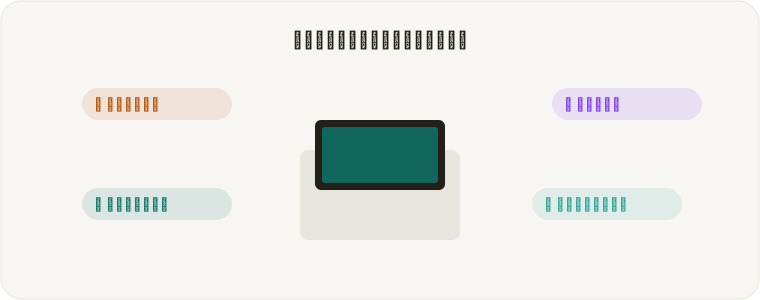
- Leave only what this round needs. Everything else goes in a drawer or on the floor
- Close unrelated tabs and anything that pops up (a "read later" tab still costs you)
- Pick a place that means focus. Do only work there, and sitting down does half the switching for you
Light, temperature, posture
Physical condition shows up directly in how long focus lasts.
- Light your work surface properly; use daylight when you have it. Dim rooms make you sleepy
- Match screen brightness to the room (a big gap tires your eyes)
- Keep the room slightly cool — warmth invites drowsiness
- Sit upright and drink water regularly. Both very hungry and very full hurt focus
Sound: block first, then choose
There’s an order to this. First, block the ambient noise you can’t avoid — conversation, construction, a television elsewhere in the house. Reduce it physically with earplugs or noise cancellation.
What you listen to comes after. Skipping the blocking step and trying to paint over noise with music just pushes the volume up until it becomes its own problem.
Choosing background sound
Music helps or hurts depending on one thing: whether words steal your attention. A focused brain processes language automatically, so lyrics pull at you whether you notice or not.
Default to instrumental. From there, pick by the work.
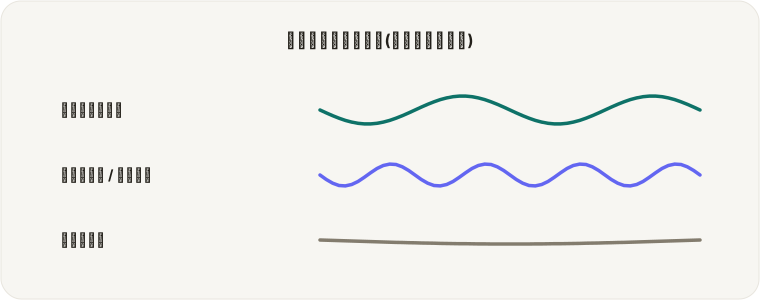
- Lo-fi: monotonous by design, hard to be distracted by
- Nature sound (rain, waves): relaxing, and masks other noise
- White noise or café ambience: for covering unpredictable sounds
- Classical or ambient: for staying quietly locked in
Volume and device traps
The same sound can help or hurt depending on how you use it.
- Keep it quiet. If the music has become the main event, it’s too loud
- Video sites put recommendations and comments in front of you. Don’t watch the player
- Build the playlist in advance so choosing tracks doesn’t eat the session
- Make playback the signal: start it with the round, stop it at the break
Making caffeine land at the right time
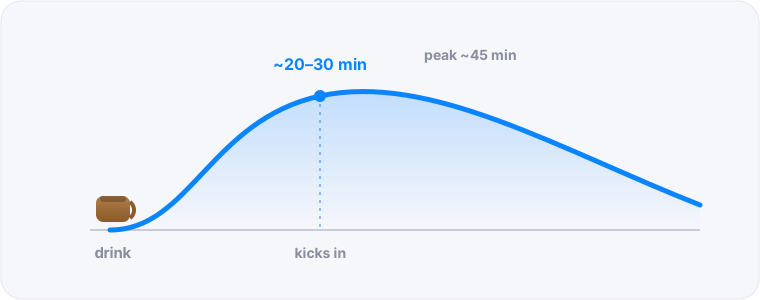
Coffee isn’t "drink it and it works" — timing is the whole thing. Caffeine takes roughly 20–30 minutes to begin having an effect and peaks around 45.
So aim slightly ahead of when you want the focus. Paired with Pomodoro, a sip at the start of a break lands you in the middle of the next round. Tying it to breaks also stops you drinking too much of it.
- Don’t drink a lot at once (tolerance varies a great deal)
- On an empty stomach it’s harsh. Keep drinking water too
- The effect lasts hours, so keep it to six hours before bed. Late coffee costs you sleep quality
- Very sleepy? A coffee nap: drink, then sleep 15–20 minutes and wake as it kicks in
Then put a boundary on the time
With the space sorted, all that’s left is cutting the time into rounds. "In this setup, I focus for 25 minutes" makes the switch much easier to flip.
Setting up pays off every day — but only once you actually use it. When you’re done arranging, press start.
Focus environment — FAQ
What has the biggest effect?
Putting your phone out of sight, ideally in another room. Removing a visible temptation changes focus more than anything else on this page. Face-down on the desk is not enough — physical distance is the point.
What should be on my desk?
Only what this round needs. Textbooks and notes you are not using go in a drawer or on the floor, out of view. Having a single sorting rule keeps the decision fast.
Are lyrics really that bad?
For reading and writing, yes — language competes for the same attention. Instrumental music is the safer default. For repetitive manual work, lyrics usually cause no trouble.
Silence or music?
It depends on the person and the task. Harder work often goes better in silence, so try both and switch by task. Give each a week before deciding.
When should I drink coffee?
Caffeine takes about 20–30 minutes to start working, so drink slightly before you want to focus. With Pomodoro, a sip at the start of a break lands during the following round.